

Who is this useful for?
Parents, teachers and caregivers
Hippotherapy supports the physical, sensory, emotional, cognitive, and social development of children with deafblindness and multisensory impairments by providing adapted experiences that promote sensory integration and inclusion.
Hippotherapy can provide numerous benefits for students with deafblindness (combined vision and hearing impairment), at physical, emotional, and social levels. The main benefits include:
- Sensory stimulation
- Emotional and social development
- Cognitive development and communication
- Social integration and inclusion
- Physical development
From a sensory perspective, hippotherapy offers the following benefits for children with deafblindness and multisensory impairments:
Visual Stimulation (adapted)
- For children with residual vision, outdoor activities, the contrast between the horse and the environment, and the horse’s regular movements can encourage effective use of residual visual perception.
- It can improve visual tracking, focus, and spatial orientation.
Auditory Stimulation (adapted)
- For children with residual hearing, ambient sounds (horse hooves, rustling nature, the therapist’s voice) can be important sources of auditory stimulation.
- Adapted sound instruments can be used to strengthen communication and attention.
Tactile Stimulation
- Contact with the horse’s coat, bridle, saddle, and other textures in the environment provides rich tactile experiences.
- Children learn to better tolerate touch and differentiate textures, temperatures, and pressures.
Sensory Integration
- Hippotherapy contributes to sensory integration, i.e., the child’s ability to process information from multiple sensory channels simultaneously and respond appropriately.
- This is essential for developing functional behaviors, emotional regulation, and social interactions.
Proprioceptive Stimulation
- The horse’s rhythmic movements stimulate the proprioceptive system (perception of body position in space), helping improve body awareness.
- It helps children understand their body limits and better coordinate their movements.
Recommendation
Choose hippotherapy as a complementary therapeutic activity conducted in a specialized setting with qualified personnel experienced in working with children with special needs. It is important to work closely with therapists to adapt the activity to your child’s specific needs. Be patient and consistent—progress may be slow, but the impact on sensory, emotional, and motor development can be profound. Encourage your child, accompany them to sessions, and be open to making this activity a positive and therapeutic experience for the whole family.
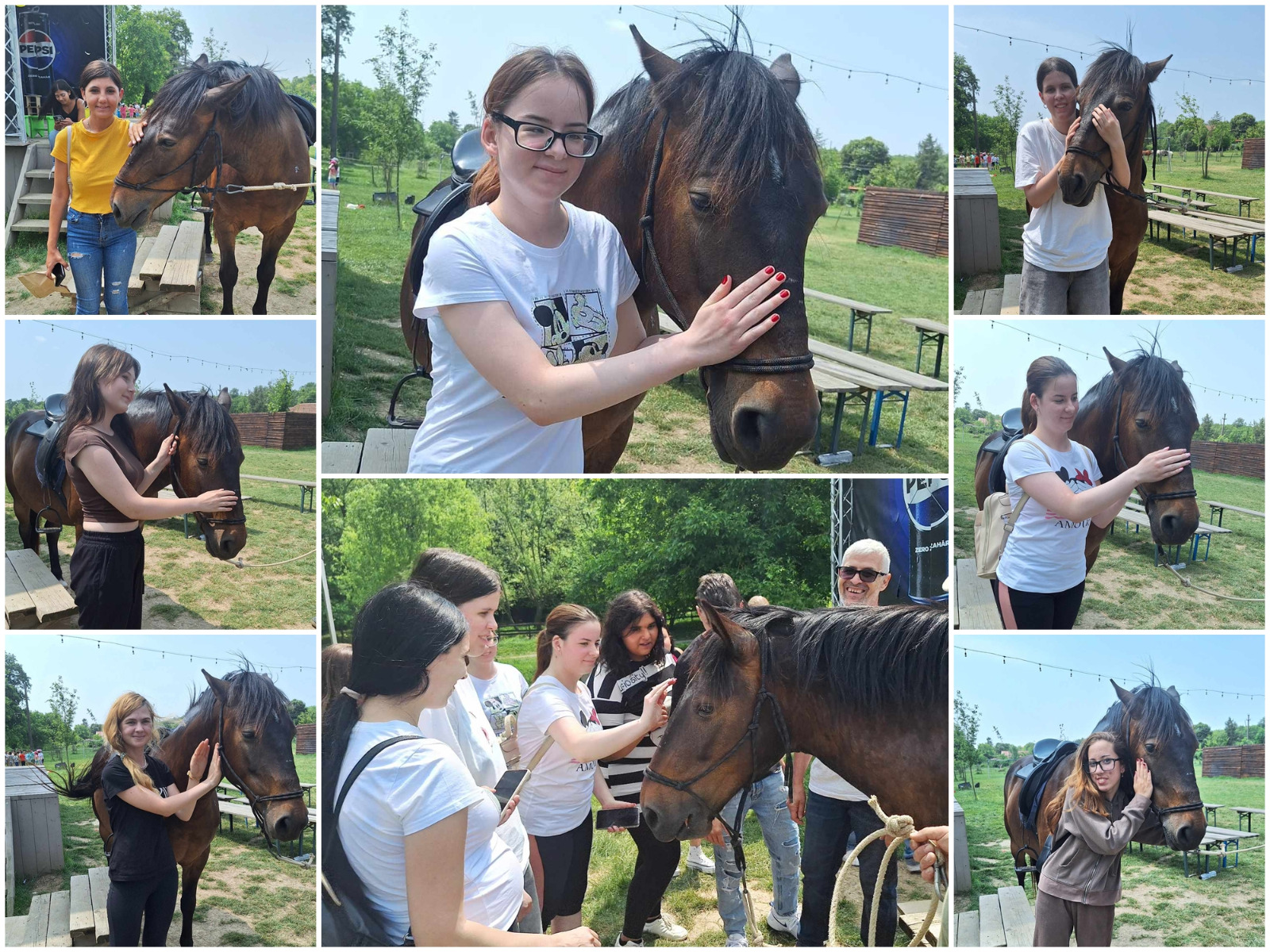
Image 1 Description: A collage of eight outdoor photographs on a green field. In each image, young people are petting a dark brown horse with a black mane and shiny coat. In the center of the collage, several people stand around the horse while an older man holds its reins. The horse is saddled and appears calm. The participants wear casual clothes, including t-shirts and comfortable pants. The sky is clear, and the atmosphere suggests recreation or animal-assisted therapy.