

Who is this useful for?
People with deafblindness, parents/caregivers, educators, community members and general public.
International Day of Deafblindness takes place each year on 27th June (also known as Helen Keller Day).
This resource explains the history of the day, how it came to be recognised, and what that recognition means for people with deafblindness around the world.
Background
27th June has been recognised as Helen Keller Day since 1980, marking the birthday of Helen Keller (1880-1968), a deafblind author and activist whose work helped to advance the rights of people with deafblindness and other disabilities around the world.
In June 2025, 27th June was officially recognised by the United Nations as International Day of Deafblindness, following a joint campaign with Permanent Mission of the Republic of Croatia to the United Nations and the World Federation of the Deafblind, guided by Dr. Sanja Tarczay. Above you can view an interview with Dr. Tarczay about the recognition of the day and what it means for the global deafblind community.
The day celebrates the rights and achievements of people with deafblindness and raise awareness of the barriers people with deafblindness face around the world, whilst continuing to seek commitment for equality and inclusion.
Who was Helen Keller
Helen Keller was a pioneering author, educator, and activist with deafblindness whose legacy continues to inspire millions worldwide.
Born in Alabama in 1880, Keller lost her sight and hearing to a childhood illness at the age of 2. She attended Perkins School for the Blind, where her teacher Anne Sullivan taught her to communicate through touch, eventually learning braille, sign language, and speech.
Helen Keller became the first person with deafblindness to graduate university. A passionate humanitarian, she advocated for the rights of persons with disabilities including deafblindness, calling on governments to fund education, training, and programmes to support people with deafblindness.
Her legacy is her work to remove barriers for people with deafblindness and other disabilities, promoting accessibility, inclusion, and recognition, and proving the potential of people with deafblindness to succeed when barriers are broken down.
“Alone we can do so little; together we can do so much.” – Helen Keller
Recognition
On 16th June 2025, the United Nations General Assembly officially proclaimed 27th June as International Day of Deafblindness.
This historic achievement was made possible through the leadership of the Permanent Mission of the Republic of Croatia to the United Nations, in close collaboration with the World Federation of the Deafblind (WFDB), under the direction of Dr. Sanja Tarczay, a Croatian woman with deafblindness and a longtime global advocate for disability rights. Other core group countries include Antigua and Barbuda, Djibouti, Jordan, and the United Republic of Tanzania. Watch the above interview with Dr. Sanja Tarczay to learn more about the process of getting the day recognised.
The resolution was introduced by Mr. Hrvoje Ćurić Hrvatinić, Deputy Permanent Representative of the Republic of Croatia to the UN, who stated the resolution was “a call to action to ensure persons with deafblindness are no longer left behind.”
99 countries co-sponsored the resolution, signalling widespread international support and a unified global voice for deafblind inclusion.
Why it matters
International Day of Deafblindness draws attention to deafblindness as a distinct disability, which is essential for ensuring the rights and inclusion of person with deafblindness.
In many countries around the world, deafblindness has not yet been recognised as a distinct disability, leading to significant gaps in legislation, service provision, and data collection. Currently, many individuals are recognised as either only deaf or only blind, meaning they miss out on essential support for their specific needs. Whilst legal recognition alone doesn’t guarantee inclusion, it is a basis for societal understanding, inclusive policy, and tailored services. Without this recognition, people with deafblindness may remain underrepresented, overlooked, and systemically invisible.
The UN’s adoption of the International Day of Deafblindness marks a milestone in raising global awareness, urging governments to recognise deafblindness within laws, policies, and programmes, and to sponsor global advocacy movements. It is a step forward in global awareness of deafblindness, amplifying the voices of the global deafblind community and demonstrating the power of collective action.
What does it mean
This milestone moment in disability advocacy puts deafblindness on the agenda of governments and organisations around the world, paving the way for policy which considers the inclusion and access of people with deafblindness in all areas of life, from healthcare and education to social security and employment. With awareness, we take the first step toward action.
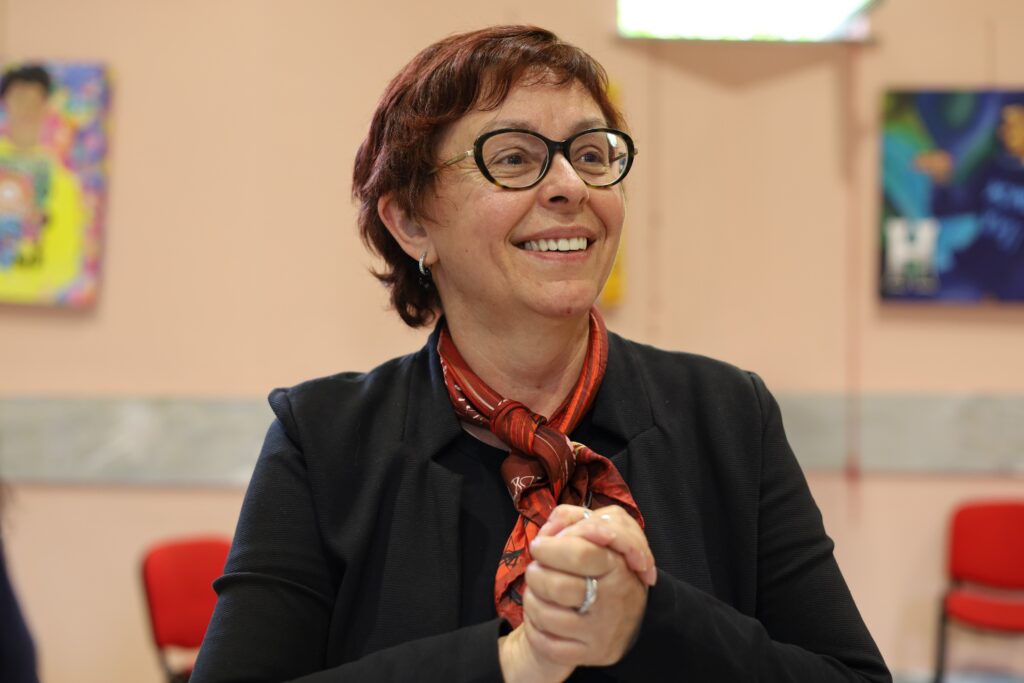
“I’m so proud to see that the world of deafblind is not all over the place anymore… it’s now united and it’s moving toward brighter future for the deafblindness movement. I know that we are not alone anymore and that we’re not left behind.”
- Dr Sanja Tarczay, President of the World Federation of the Deafblind
Sense International celebrates the recognition of this day as the only organisation working globally to ensure people with deafblindness and their families can live, learn, and thrive. Working in partnership, we advocate for change, break down barriers, and amplify the voices of the people we support, championing a new generation of disability advocates to build a world where everyone is included.